
Low Bun, Braid or Half-Up Hair: Choosing a Bridal Hairstyle
A low bun, braid and half-up hairstyle each create a different relationship between the face, shoulders and outfit. The right choice is not decided by a single face-shape rule
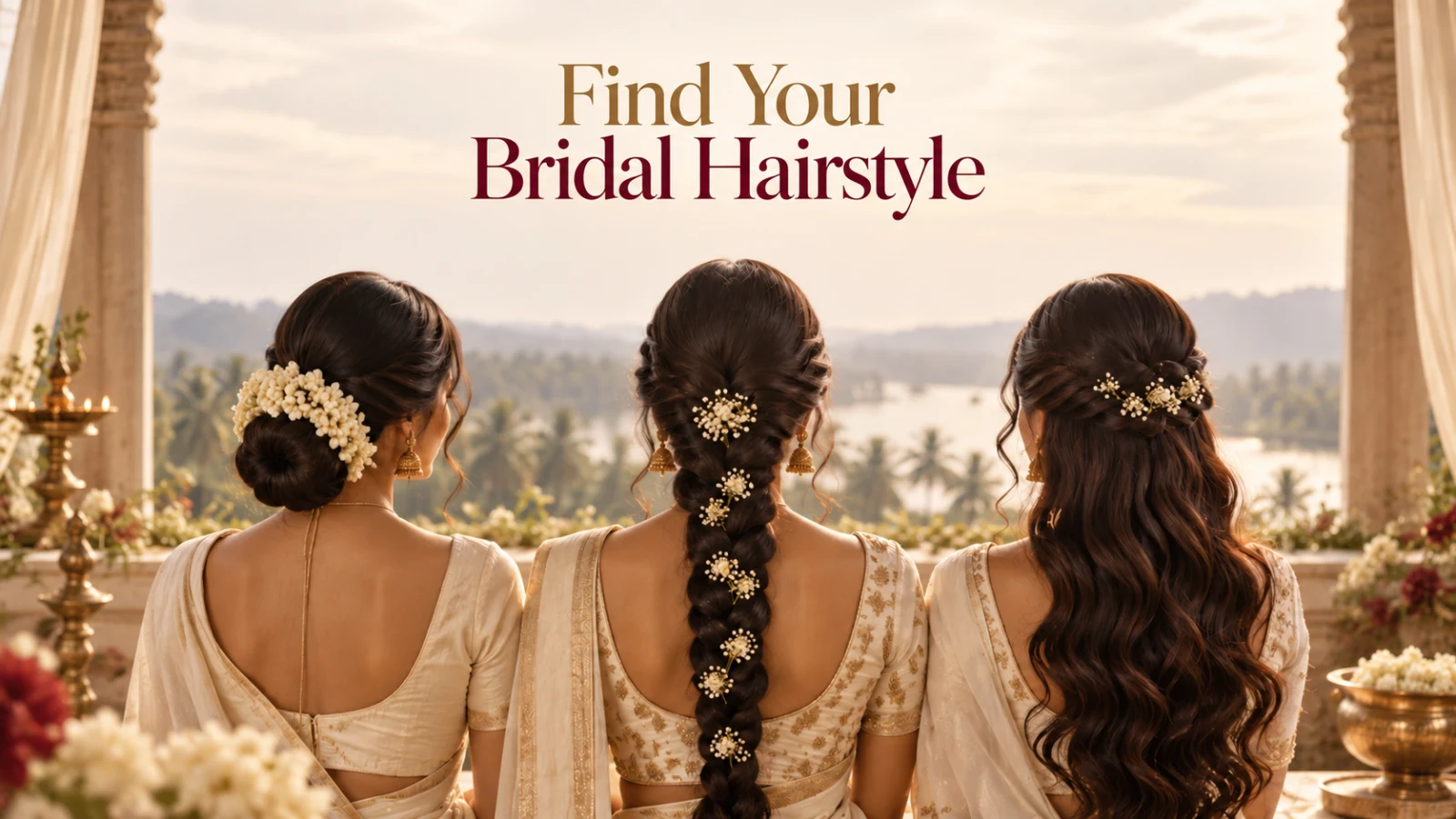
A low bun, braid and half-up hairstyle each create a different relationship between the face, shoulders and outfit. The right choice is not decided by a single face-shape rule. Consider your hair, neckline, accessories and preferred amount of movement before choosing a bridal reference to develop with your artist.
Understand the outline of each option
A low bun can keep attention on the face and neckline while concentrating detail at the back. A braid creates a longer visual line and can carry flowers or decorative elements along it. Half-up hair leaves more movement near the shoulders while giving some structure around the face. These are starting observations, not promises about every design. Look at several versions of the option you prefer, because placement, fullness and the amount of texture can change the impression even within the same hairstyle category.
Use your outfit to narrow the choice
Consider whether you want to reveal a detailed blouse, frame an open neckline or balance a substantial necklace. Hair worn across a shoulder changes what remains visible. A hairstyle that looks beautiful without accessories may read differently after earrings and flowers are added. Compare the complete outfit from the front and back. If you are undecided, identify which view matters most to you and why. This gives the discussion a practical focus instead of turning the decision into an abstract search for the universally best bridal hairstyle.
Choose the version you can wear comfortably
Think about how often you normally move hair away from your face or adjust a parting. Those habits can reveal whether loose strands will feel appealing or distracting. Describe your actual length and texture so the reference can be adapted realistically. Ask how any additional hair or accessories would affect the design and the agreed service. The most successful choice is one that gives you the appearance you enjoy while respecting your comfort, not one you select because it seems more elaborate than the other options.
Know what a good enquiry should include
A useful first message brings the basic planning information together. Include your date, exact location, event type, ready time, the services you want and the number of people involved. Add a clear outfit image if you already have one, and explain any important preference that may affect the preparation. If something is not final yet, say so rather than guessing. This gives the discussion a realistic starting point and helps identify which decisions need to happen next. It also makes follow-up more efficient because the essential details are not spread across several unrelated messages. Confirm the final arrangement directly before assuming a date has been reserved.
Give one person the practical details
Choose a reliable friend or family member to keep the preparation plan, important contact numbers and small accessories together. Their job is to help with practical questions while you are being styled, rather than to make beauty decisions on your behalf. They can check whether the photographer has arrived, find a missing jewellery box or remind someone of their preparation slot. Agree in advance about which decisions still need your approval. This arrangement is especially useful when several relatives are getting ready together. It reduces repeated interruptions and makes the morning easier to follow without turning a personal celebration into a rigid production schedule.
Choose a style from more than the front view
A hairstyle changes the shape of the head from the front, side and back. Review all three views before settling on a reference. A low bun may feel understated from the front but carry considerable detail at the back, while a half-up style can put more movement around the shoulders. Consider where the neckline, earrings and any flower arrangement sit within those views. Turn your head and look down to check how the silhouette behaves. The best choice is not necessarily the most intricate arrangement. It is the one whose proportions work with your face, outfit and the way you want to move through the event.
Say when a hairstyle feels too tight
Speak up if a pin presses, an accessory pulls or a finished section feels uncomfortable. Waiting until you leave the preparation space can make a small adjustment much harder to arrange. Comfort is useful feedback, not an interruption. Move your head gently and consider the activities ahead rather than assessing the style only while sitting still. A secure arrangement should not rely on ignoring discomfort. Tell your artist about areas you usually find sensitive and any previous experience that you want to avoid repeating. The final check can then include both the appearance and the way the hairstyle feels, with time to change a specific point before the event begins.
Keep a small, relevant touch-up kit
A useful touch-up kit contains items you understand and are likely to use. Tissues, a small mirror, the agreed lip colour and a few appropriate hair accessories may be more helpful than carrying an entire makeup bag. Ask which products suit your finished look before adding them to the kit. More products do not automatically mean better maintenance, and layering an unfamiliar formula over existing work can change its appearance. Put the kit with someone who will stay nearby throughout the event. If your outfit has no practical pocket or bag, decide who will carry it before photographs begin so it does not disappear into another vehicle.
Share your actual hair length and texture
Photographs of your own hair are an important part of hairstyle planning. Show the length, natural texture and any layers that could affect the finished shape. Mention extensions or accessories you already own instead of assuming they will be needed. A reference may depend on a different amount of hair, a different cut or temporary additions. Discussing those differences early gives you time to consider a suitable adaptation. It also helps separate the mood you like from the construction needed to achieve it. Your artist can then talk about realistic options without promising an identical result from very different starting points or discovering an important detail during the final hour.
Think about the neckline and the back of the outfit
The back of an outfit is easy to forget while collecting beauty references, yet it can be an important part of the finished image. An open back, decorative fastening or carefully worked blouse may deserve to remain visible. Hair worn down creates a different frame from hair lifted away from the fabric. Neither choice is automatically better; the decision depends on what you want people to notice. Share a full front and back view of the outfit, then discuss how the hairstyle could support those details. The same approach helps with high collars and scarves, where the amount of hair around the neck affects the overall proportions and comfort.
Leave useful notes for the person helping you
If someone will assist after your service is complete, share only the instructions they need. They might help carry the touch-up kit, keep an accessory safe or locate the next outfit. Explain which items should be left alone and which can be adjusted easily. A helper does not need to improvise a new beauty routine or add products because a photograph looks slightly different. Keep the agreed instructions with the relevant kit so they can be checked quickly. A small amount of preparation lets another person support you without turning every practical moment into a new decision about the look you have already chosen.
Plan your look with Eloria
Eloria focuses on bridal makeup, hairstyling and occasion beauty in North Kerala, especially Kannur. Share your celebration date, exact location, ready time, outfit details and the services you are considering. These details help the team discuss a suitable look and a realistic preparation schedule. Availability and the final scope should be confirmed directly before treating your date as booked.
Frequently asked questions
Is a bun always more secure than hair worn down?
The practical result depends on the construction, your hair and the service. Discuss your event and comfort needs rather than relying on a category alone.
Can short hair be adapted to a bridal reference?
Share clear photographs of your actual length and layers so your artist can discuss realistic adaptations.
Should my neckline affect the hairstyle?
Yes, it is worth considering which outfit details you want to reveal or frame from the front and back.
Do I need extensions for a half-up look?
Not automatically. The reference, your hair and the desired fullness determine what should be discussed.
Can I change from a bun to another style later?
Discuss both looks and the transition time before confirming the plan; the change may involve more than removing a few pins.