
Makeup References: How to Build a Useful Bridal Mood Board
A bridal mood board should make a conversation clearer, not turn it into a search through hundreds of screenshots. The most useful references explain what attracts you and how you want the final look to feel
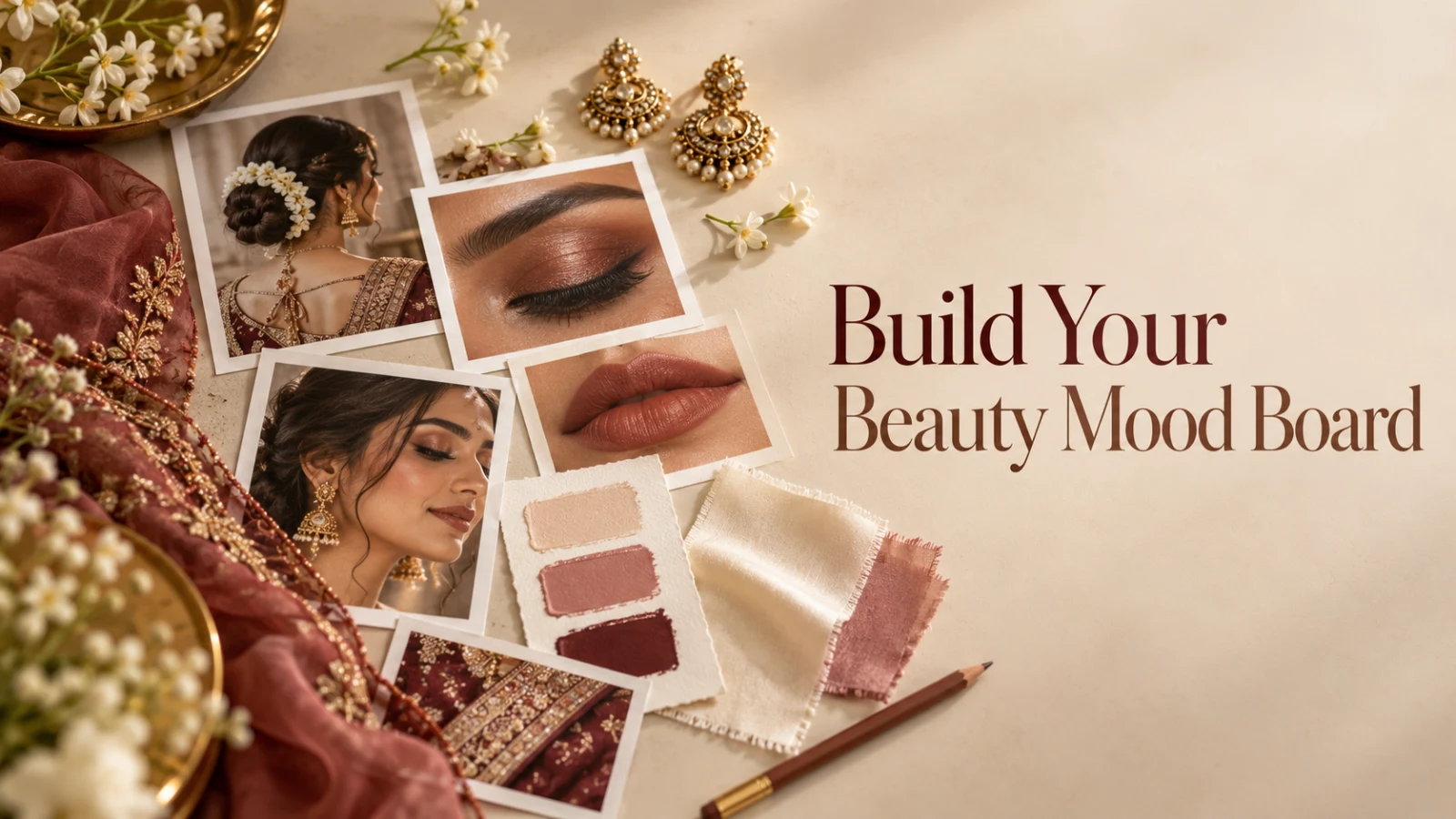
A bridal mood board should make a conversation clearer, not turn it into a search through hundreds of screenshots. The most useful references explain what attracts you and how you want the final look to feel. A smaller, annotated selection can communicate more than a large collection of unrelated beautiful photographs.
Sort references by the detail you like
Create small groups for eyes, lips, hair and the complete outfit. Under each image, write one sentence about the detail that matters. You may like the softness of a liner but not the lip colour in the same photograph. Without a note, an artist has to guess which part you mean. Try to use images that show the feature clearly instead of relying only on dramatic poses. This turns a mood board from a wish list into a practical brief that can be discussed and adapted.
Include yourself in the board
Add a photograph of yourself in a look you already enjoy. It can show the kind of brow, parting or amount of colour that feels familiar. Your own image gives context that inspiration photographs cannot provide. Avoid treating another person’s face as a template that must be copied exactly. Features, hair, lighting and editing all affect a reference. The useful task is to identify the direction you want and discuss how it could work for you, rather than judging success only by how closely two photographs resemble one another.
Remove contradictions before the final discussion
Review the board once the outfit and jewellery are clearer. If one image shows a very structured eye and another shows almost no definition, decide which detail belongs in the final plan or explain that you are still choosing. Keep a short summary of the agreed direction at the top. Save later inspiration separately so it does not quietly replace settled decisions. A clear mood board can still leave room for creativity; it simply makes sure the creativity starts from preferences you have actually communicated.
Coordinate hair and makeup as one look
Decide how the hairstyle and makeup will share attention. Hair lifted away from the face may make an eye look or earring shape more visible, while loose texture can soften the outline around the cheeks. A detailed hair accessory can change how much sparkle you want near the eyes. Review the two parts together instead of finalising them through separate reference collections that never meet. This does not mean both need the same degree of detail. One can be more restrained while the other provides the main visual interest. The useful measure is how the finished combination supports your features, outfit and preferred level of expression.
Choose an intentional place for the strongest detail
Step back and identify the detail you would like someone to notice first. It might be the face, a jewellery piece, a flower arrangement or the clean outline of the outfit. Once that priority is clear, look at the remaining elements and decide whether they support or distract from it. A detail does not have to be large to be memorable. Sometimes reducing one competing accent gives the whole look more clarity. This is a personal visual decision rather than a fixed rule about what a bride or guest should wear. Use the complete mirror view to guide it, especially when individual items have been selected at different times.
Keep a small, relevant touch-up kit
A useful touch-up kit contains items you understand and are likely to use. Tissues, a small mirror, the agreed lip colour and a few appropriate hair accessories may be more helpful than carrying an entire makeup bag. Ask which products suit your finished look before adding them to the kit. More products do not automatically mean better maintenance, and layering an unfamiliar formula over existing work can change its appearance. Put the kit with someone who will stay nearby throughout the event. If your outfit has no practical pocket or bag, decide who will carry it before photographs begin so it does not disappear into another vehicle.
Treat lip colour as a whole-look decision
Try to choose lip colour with your outfit and jewellery in view. The same shade can feel quiet beside one fabric and much stronger beside another. Consider whether you want the lip to lead the look or provide a finishing connection between the eyes and cheeks. Think about your usual comfort level as well as a reference photograph. If the colour feels unfamiliar, allow time to look at it in the full face rather than judging a small swatch alone. Ask about the texture and the simplest way to refresh it after eating. A colour you can maintain comfortably may serve you better than a dramatic option that makes you hesitant to smile.
Plan the position of flowers and hair jewellery
Hair accessories need a place within the design rather than being added wherever space remains. Share their size, weight and fastening style when discussing the hairstyle. If flowers are involved, show the intended arrangement or describe the amount you prefer. A narrow line of flowers creates a different outline from a fuller cluster. Think about how the accessory sits beside earrings, a veil or the edge of an outfit. Keep the pieces together with any supplied attachments so the artist can see the complete set. A well-planned arrangement should look intentional from several angles and feel manageable when you turn, sit or greet guests.
Choose a practical plan for changing hairstyles
If you want different hair for two events, share both looks together during planning. Explain the time between them, whether the outfit changes and who will be available to help. A second style is not always a matter of removing one accessory; pins, texture and the underlying construction can affect the next step. Ask which elements can stay and which need a separate preparation window. Keep the accessories for each look clearly separated. A realistic transition may involve a small change in parting, shape or placement rather than rebuilding everything. Knowing the actual sequence helps you choose a change that feels worthwhile without making the whole day depend on an optimistic estimate.
Confirm the scope without relying on assumptions
Discuss the services, people and timings included in your enquiry before considering the plan complete. If you mention a reference with extra accessories, an outfit change or a second hairstyle, ask whether those details alter the agreed scope. Share any travel between locations and the expected number of people requiring preparation. A clear conversation makes it easier to compare the plan with what you need. It also prevents a small phrase such as finishing touches from carrying several different expectations. Keep the agreed details available to refer to if something changes. A useful booking discussion is specific enough that everyone understands the same preparation sequence.
Use references as a conversation
Choose a small number of photographs and explain what you like about each. One image might show the softness of an eye look, another the placement of flowers, and a third the overall balance with jewellery. Try not to ask one photograph to communicate every preference. A reference also contains another person's features, lighting, camera settings and editing, so the useful discussion is about direction rather than exact duplication. Include a photograph of yourself in a look you already enjoy wearing. Knowing what feels familiar can be as helpful as seeing an aspirational image, especially when deciding how much change will feel comfortable during a long celebration.
Plan your look with Eloria
Eloria focuses on bridal makeup, hairstyling and occasion beauty in North Kerala, especially Kannur. Share your celebration date, exact location, ready time, outfit details and the services you are considering. These details help the team discuss a suitable look and a realistic preparation schedule. Availability and the final scope should be confirmed directly before treating your date as booked.
Frequently asked questions
How many images should a bridal mood board contain?
Use a small, focused collection with clear notes. There is no need to keep every attractive image you find.
Can I combine details from different references?
Yes. Explain which feature you like in each image so the combined brief remains understandable.
Should I include my own photograph?
It helps show the features, hair and familiar looks that inspiration images alone cannot communicate.
What if my references contradict one another?
Identify which decisions remain open and discuss them directly rather than expecting the artist to guess your final preference.
Should filters affect how I choose references?
Remember that lighting and editing can change an image. Focus on useful design details rather than expecting identical skin texture or colour.