
Matching Bridal Makeup with Gold Jewellery Without Overdoing It
Gold jewellery can provide a rich frame for a bridal look. The challenge is not to make every makeup detail equally rich, but to decide how the pieces relate to the face and outfit
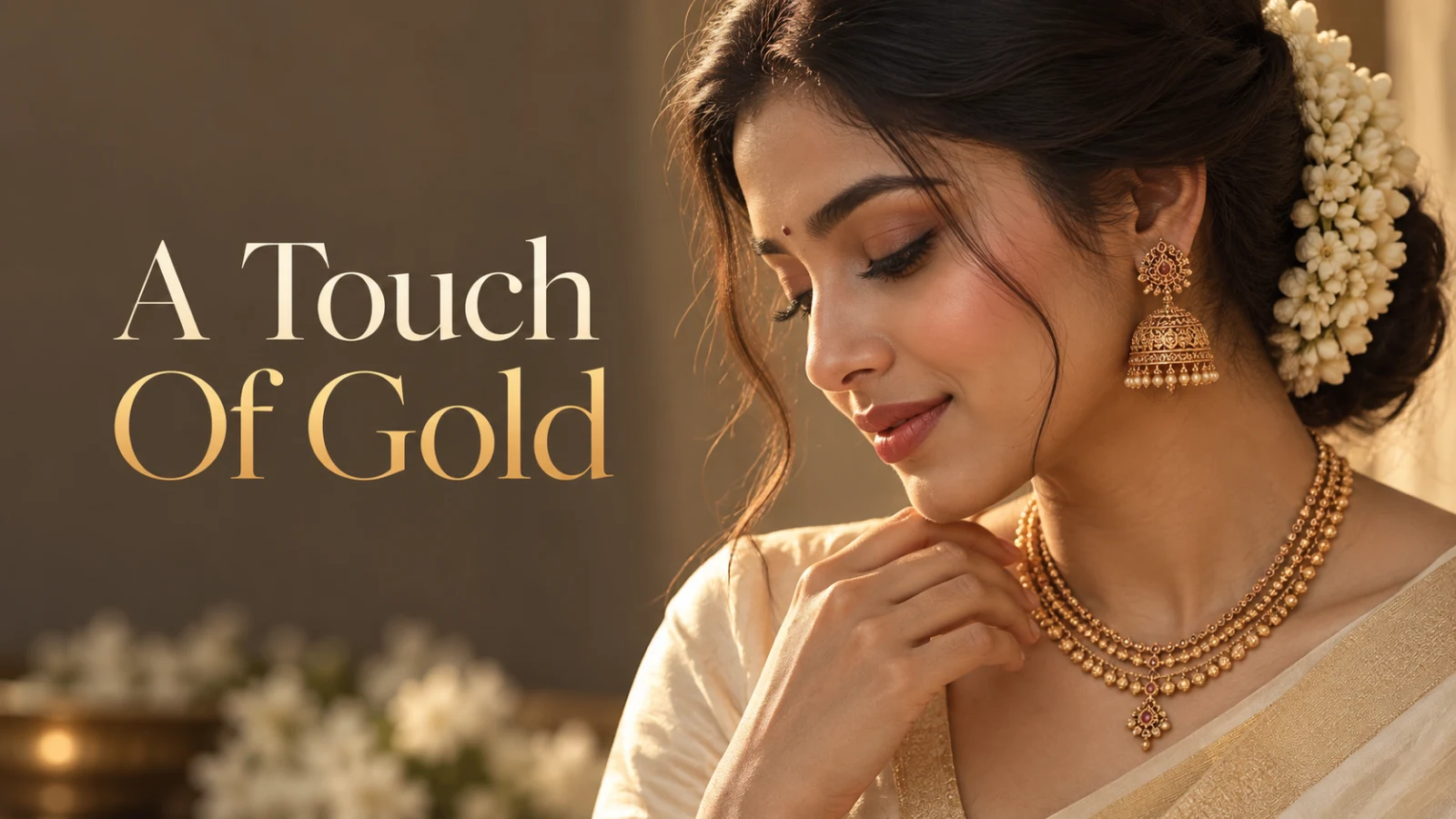
Gold jewellery can provide a rich frame for a bridal look. The challenge is not to make every makeup detail equally rich, but to decide how the pieces relate to the face and outfit. A little attention to proportion can help a Kannur bridal ensemble feel considered rather than crowded.
Look at the jewellery as a complete arrangement
Lay out the necklace, earrings, hair pieces and any other items together. Their combined scale matters more than the size of one piece viewed alone. Consider where the strongest detail sits: near the cheeks, along the neckline or above the forehead. Share this arrangement with your artist so the makeup can respond to the frame it creates. A particularly detailed earring may change how you feel about a strong lower eye line, while a fuller necklace can influence the amount of visible emphasis you want elsewhere.
Choose where reflection should appear
Several reflective elements close together can alter the impression of a face in photographs. This does not mean avoiding shimmer; it means using it with a purpose. Discuss whether you prefer the jewellery to provide most of the sparkle or would like a visible reflective accent on the eyes as well. Compare the choices with the fabric finish. A quieter cheek or more restrained brow may create useful space around a striking accessory. Treat each addition as a relationship with the existing look rather than a separate upgrade.
Let the hairstyle reveal your chosen details
Hair can frame jewellery, hide it or create another line beside it. If the earrings are important to you, assess the hairstyle with them in place. A loose section may need a small change in position to show their shape clearly. If you prefer a more contained style, review how the hair jewellery connects with the bun or braid. The front view is only part of the decision. A side photograph and a relaxed mirror check can show whether the face, hair and gold details feel balanced together.
Check eye makeup with your eyes open
An eye look is experienced in movement, not only in a closed-eye photograph. Check the design with your eyes open and your face relaxed. Look ahead, smile and glance down so you can see which details remain visible in ordinary expression. The shape of the lid, the position of a liner and the placement of shadow all contribute to that impression. Explain whether your priority is a soft outline, stronger definition or a particular colour. A reference can guide the mood, but the placement may need to change for your features. Judge the result on your own face rather than on how closely a closed-eye close-up resembles another person's image.
Keep brow styling consistent with your expression
Brows frame the eyes, but they do not need to become the strongest part of every makeup look. Discuss the shape you already have and how much definition feels natural to you. A small change in darkness or the appearance of the front of the brow can noticeably affect the face. Look at both brows together from a normal viewing distance, remembering that faces have natural asymmetry. The aim is balance rather than forcing every detail into a perfectly mirrored shape. If you have a particular preference about softness, fullness or definition, explain it early so it can be considered alongside the rest of your eye makeup.
Prepare for the journey after styling
Think about how you will travel once your hair is finished. A high arrangement, a delicate accessory or a large flower placement may need a little extra care when entering a vehicle or leaning against a seat. Ask for practical guidance before leaving rather than discovering the issue during the journey. Keep a suitable spare pin or the agreed accessory with someone nearby if your artist recommends it. Avoid repeatedly handling the finished style out of habit. Plan where scarves, dupattas or other pieces will sit so they do not catch unexpectedly. The aim is to make the transition from preparation to the celebration feel straightforward and comfortable.
Approach shine with placement in mind
A luminous finish does not require the same amount of reflection across the whole face. Talk about where you enjoy seeing light and where you prefer a more controlled appearance. The forehead, cheeks and area around the nose can behave differently over the course of an event. Your artist may suggest a combination of finishes rather than choosing one label for the entire face. Check the result in motion and in the lighting you expect to encounter. If you are bringing a touch-up product, ask where and how to use it. Adding more powder everywhere or more shine everywhere can gradually change a balanced finish into something you did not initially request.
Choose a practical plan for changing hairstyles
If you want different hair for two events, share both looks together during planning. Explain the time between them, whether the outfit changes and who will be available to help. A second style is not always a matter of removing one accessory; pins, texture and the underlying construction can affect the next step. Ask which elements can stay and which need a separate preparation window. Keep the accessories for each look clearly separated. A realistic transition may involve a small change in parting, shape or placement rather than rebuilding everything. Knowing the actual sequence helps you choose a change that feels worthwhile without making the whole day depend on an optimistic estimate.
Keep skin preparation familiar
Tell your artist which products you use regularly and anything you have previously found uncomfortable. The event day is easier to plan when your preparation follows a familiar routine rather than a collection of last-minute experiments. Avoid interpreting a makeup consultation as a promise to diagnose or treat a skin concern. If there is an ongoing issue that needs medical advice, discuss it with a qualified clinician independently of the event plan. For beauty preparation, useful information includes how your skin usually feels through the day, the finishes you prefer and any products you want to avoid. Clear information helps the artist choose an approach that respects your preferences and experience.
Make a plan that works across several events
List each event, its outfit and its ready time before deciding how much the beauty direction should change. A family function, the main ceremony and a reception can feel distinct through small changes in colour, texture or accessories. You may not need a completely unrelated design for every occasion. Identify the element you want to repeat, then choose the changes that will be most noticeable and worthwhile. Include the available transition time when discussing those ideas. Planning the sequence together avoids choosing several attractive references that require incompatible starting points or more preparation time than the event schedule can actually provide.
Use references as a conversation
Choose a small number of photographs and explain what you like about each. One image might show the softness of an eye look, another the placement of flowers, and a third the overall balance with jewellery. Try not to ask one photograph to communicate every preference. A reference also contains another person's features, lighting, camera settings and editing, so the useful discussion is about direction rather than exact duplication. Include a photograph of yourself in a look you already enjoy wearing. Knowing what feels familiar can be as helpful as seeing an aspirational image, especially when deciding how much change will feel comfortable during a long celebration.
Plan your look with Eloria
Eloria focuses on bridal makeup, hairstyling and occasion beauty in North Kerala, especially Kannur. Share your celebration date, exact location, ready time, outfit details and the services you are considering. These details help the team discuss a suitable look and a realistic preparation schedule. Availability and the final scope should be confirmed directly before treating your date as booked.
Frequently asked questions
Should gold jewellery always be matched with gold eyeshadow?
No. A coordinated look can use warm accents, neutral tones or a quieter eye without matching the metal exactly.
Can I wear a bold lip with substantial jewellery?
Yes. Review the complete combination and decide whether the lip should share attention or provide a quieter finish.
Why should I share all the jewellery pieces?
Their combined scale and placement affect the visual frame around the face and neckline.
Can hair make jewellery look less crowded?
Hair placement can reveal or soften particular pieces. Discuss which accessories you most want to show.
What is the easiest way to check the balance?
Review the face, hair, jewellery and outfit together from a normal viewing distance, then check a side angle.