
Soft Glam or Traditional Bridal Makeup: Choosing Your Direction
Soft glam and traditional bridal makeup are useful starting descriptions, but they are not two fixed boxes. A bride in Kannur can enjoy a traditional outfit with a softer face, or a contemporary silhouette with stronger definition
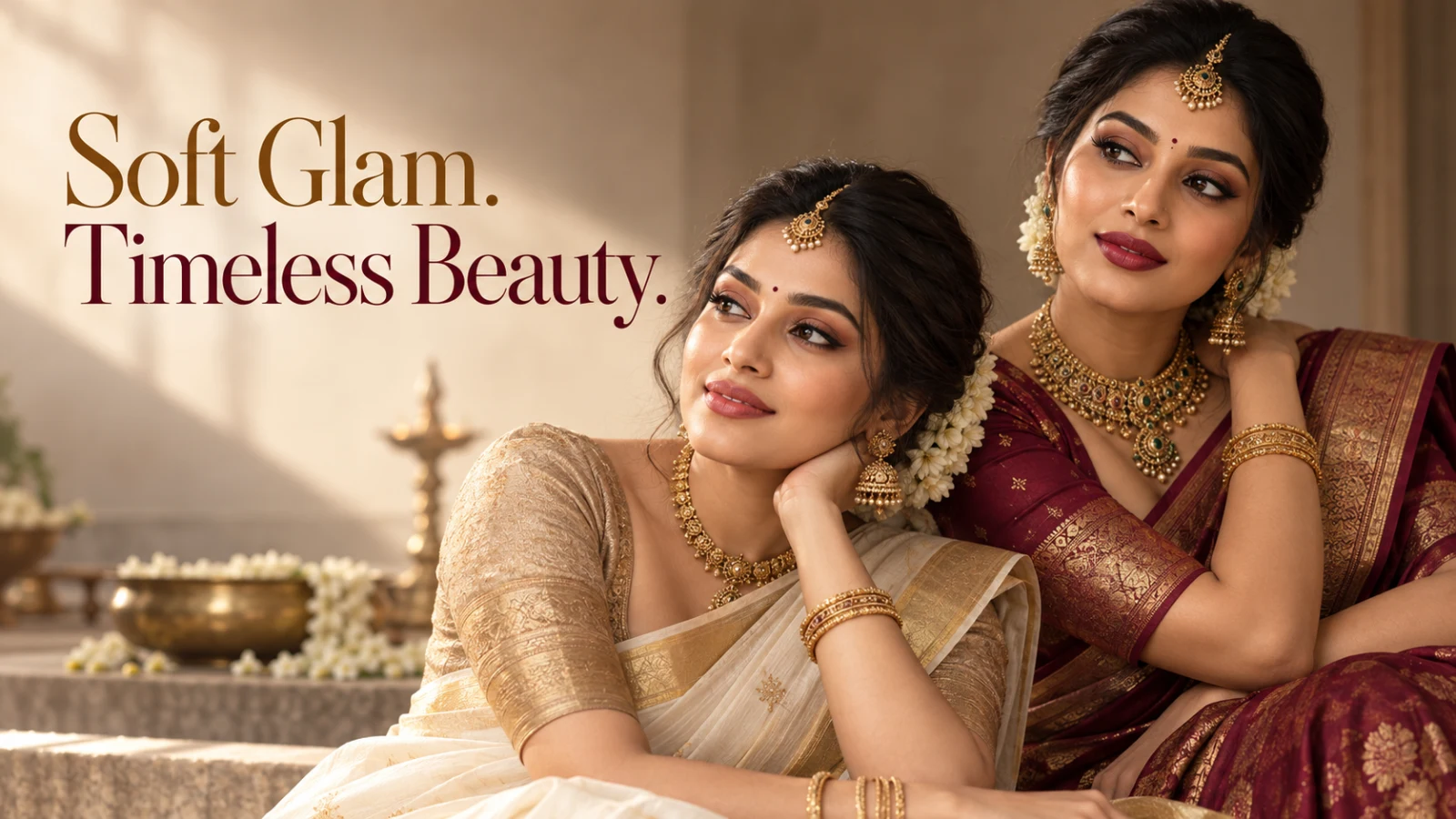
Soft glam and traditional bridal makeup are useful starting descriptions, but they are not two fixed boxes. A bride in Kannur can enjoy a traditional outfit with a softer face, or a contemporary silhouette with stronger definition. The best direction comes from understanding the individual details behind each label.
Translate the labels into visible choices
Soft glam often suggests blended transitions and a considered balance of definition, but the phrase does not tell your artist which colours or coverage you prefer. Traditional can refer to the relationship between makeup, attire and jewellery rather than one mandatory technique. Ask which details are doing the work in a reference: a defined eye, a prominent lip or a particular finish. Once those choices are separated, you can discuss them without feeling that a single label commits you to every feature of another person’s look.
Find a balance beside traditional jewellery
A necklace, earrings and hair jewellery can create a strong frame around the face. Put those pieces beside an outfit photograph and look at the combination before deciding how much makeup contrast you want. A restrained cheek or softer brow may give another element more room to stand out. Equally, a defined eye can sit comfortably within a traditional ensemble when its shape and colour feel intentional. The purpose is to create a relationship between the elements, not to make each one equally noticeable.
Build a personal middle ground
You may like the eye definition of one reference and the softer lip in another. Explain that combination directly instead of asking your artist to choose between two broad categories. Consider how you normally feel wearing colour at a long function. A small step beyond your usual look can feel special without becoming unfamiliar. Review the plan in a complete mirror view. If you can describe why each chosen detail belongs, the result is likely to feel more personal than a look assembled mainly to fit a popular name.
Make a plan that works across several events
List each event, its outfit and its ready time before deciding how much the beauty direction should change. A family function, the main ceremony and a reception can feel distinct through small changes in colour, texture or accessories. You may not need a completely unrelated design for every occasion. Identify the element you want to repeat, then choose the changes that will be most noticeable and worthwhile. Include the available transition time when discussing those ideas. Planning the sequence together avoids choosing several attractive references that require incompatible starting points or more preparation time than the event schedule can actually provide.
Confirm the scope without relying on assumptions
Discuss the services, people and timings included in your enquiry before considering the plan complete. If you mention a reference with extra accessories, an outfit change or a second hairstyle, ask whether those details alter the agreed scope. Share any travel between locations and the expected number of people requiring preparation. A clear conversation makes it easier to compare the plan with what you need. It also prevents a small phrase such as finishing touches from carrying several different expectations. Keep the agreed details available to refer to if something changes. A useful booking discussion is specific enough that everyone understands the same preparation sequence.
Create a preparation space that supports the service
The place where you get ready should make it easy to see, sit and reach the items needed for your look. Share useful information about available light, a mirror, seating and a nearby surface before the day. Keep clothing and accessories arranged so they are not repeatedly moved through the working area. If other people will use the same room, agree on a practical order and leave enough clear space for everyone to move. The aim is a comfortable preparation setting rather than a perfect photograph of the room. A few simple arrangements can reduce interruptions and help the beauty work progress at a steadier pace.
Choose an intentional place for the strongest detail
Step back and identify the detail you would like someone to notice first. It might be the face, a jewellery piece, a flower arrangement or the clean outline of the outfit. Once that priority is clear, look at the remaining elements and decide whether they support or distract from it. A detail does not have to be large to be memorable. Sometimes reducing one competing accent gives the whole look more clarity. This is a personal visual decision rather than a fixed rule about what a bride or guest should wear. Use the complete mirror view to guide it, especially when individual items have been selected at different times.
Build the plan around the person wearing it
References and checklists should make decisions easier, not create a standard you feel obliged to meet. Consider your normal preferences, how much time you want to spend getting ready and which parts of the celebration you most want to enjoy. If a fashionable detail feels unlike you, discuss a quieter interpretation or leave it out. If you love a bold feature, there is no need to dilute it solely because another person prefers something softer. A useful beauty plan leaves room for personality while making the practical details clear. The finished result should feel like a deliberate choice you made for your own occasion.
Leave useful notes for the person helping you
If someone will assist after your service is complete, share only the instructions they need. They might help carry the touch-up kit, keep an accessory safe or locate the next outfit. Explain which items should be left alone and which can be adjusted easily. A helper does not need to improvise a new beauty routine or add products because a photograph looks slightly different. Keep the agreed instructions with the relevant kit so they can be checked quickly. A small amount of preparation lets another person support you without turning every practical moment into a new decision about the look you have already chosen.
Know what a good enquiry should include
A useful first message brings the basic planning information together. Include your date, exact location, event type, ready time, the services you want and the number of people involved. Add a clear outfit image if you already have one, and explain any important preference that may affect the preparation. If something is not final yet, say so rather than guessing. This gives the discussion a realistic starting point and helps identify which decisions need to happen next. It also makes follow-up more efficient because the essential details are not spread across several unrelated messages. Confirm the final arrangement directly before assuming a date has been reserved.
Keep personal preferences at the centre
Advice from relatives can be valuable, but a long list of competing opinions can make a simple decision feel difficult. Before the event, identify a few things that matter most to you: perhaps a comfortable finish, visible natural texture, a particular parting or a lip colour you recognise. Share these preferences clearly and return to them when new suggestions appear. You can appreciate an idea without adding it to your own look. A beauty service should help you feel prepared to enjoy the occasion. Confidence often comes from decisions that feel settled and personal, rather than from following every suggestion that arrives during the final hour.
Plan your look with Eloria
Eloria focuses on bridal makeup, hairstyling and occasion beauty in North Kerala, especially Kannur. Share your celebration date, exact location, ready time, outfit details and the services you are considering. These details help the team discuss a suitable look and a realistic preparation schedule. Availability and the final scope should be confirmed directly before treating your date as booked.
Frequently asked questions
Is soft glam the same as no makeup?
No. A soft-looking result can involve careful work. Describe the visible finish you prefer rather than judging it by product quantity.
Must a traditional bridal look include a dark lip?
No. Lip colour should suit your preferences and the complete outfit; there is no single compulsory shade.
Can I combine traditional jewellery with softer makeup?
Yes. Discuss the jewellery and makeup together so their balance feels deliberate and comfortable.
How many references should I share?
A few clear examples with notes about what you like are usually more useful than many unexplained images.
Which option is best for a Kannur wedding?
The right option depends on your features, attire, event plans and preferences, rather than the location alone.