
Your Bridal Touch-Up Kit: Small Essentials for a Long Celebration
A bridal touch-up kit works best when it is small enough to find and simple enough to use. The purpose is to support the look you have chosen, not to carry a second makeup collection
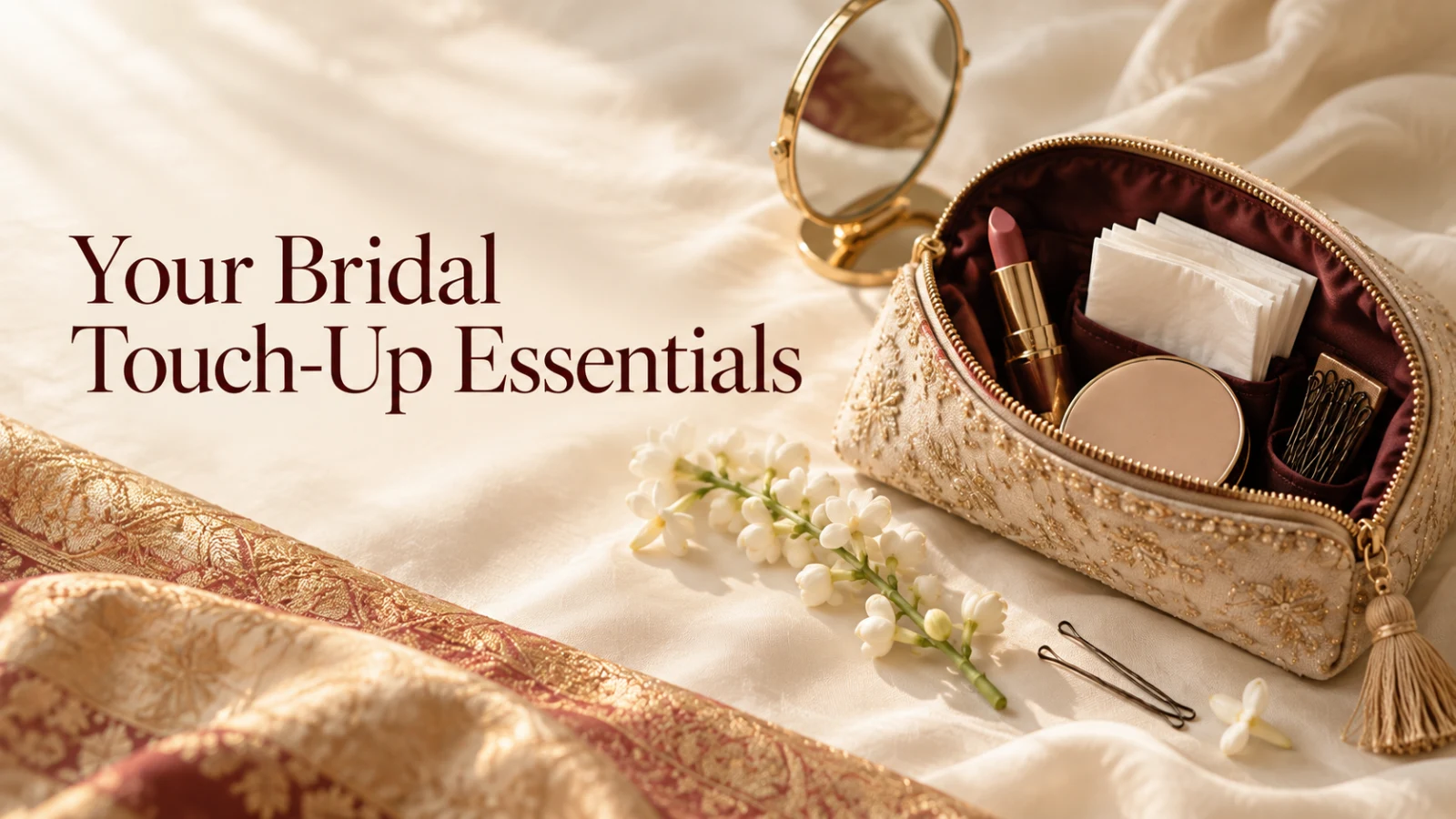
A bridal touch-up kit works best when it is small enough to find and simple enough to use. The purpose is to support the look you have chosen, not to carry a second makeup collection. Plan it with your artist and decide who will keep it accessible during your Kannur celebration.
Choose items for specific tasks
Start with the moments when a small check may be useful: after eating, before a portrait sequence or during an outfit change. Ask which items suit those moments and the finished look. The agreed lip colour, tissues and a small mirror may be more useful than several products described as essentials online. If hair needs a particular spare accessory, add it with instructions. Every item should have a clear job. A crowded kit can make a quick adjustment slower and encourage unnecessary experimentation over work that was already balanced.
Give the kit one reliable home
Choose someone who will stay near you and ask them to keep the kit in a practical bag. Tell them what is inside and which items belong to you or need to be returned. Avoid splitting the contents between several relatives or vehicles. If the celebration has more than one location, include the kit in the transfer checklist. A useful product left in a room you have already left is not a useful touch-up plan. Simple ownership of the kit can prevent repeated searches during an otherwise settled event.
Learn when to leave a feature alone
Ask your artist how to assess the makeup before adding anything. A change in phone-camera lighting does not necessarily mean the base needs another layer. If only the lip colour needs refreshing, keep the adjustment focused there. Avoid borrowing an unfamiliar formula because it looks close to the original shade. The same principle applies to hair: ask which small adjustments are sensible and which parts should not be handled repeatedly. A good kit makes maintenance more controlled, including the decision that nothing needs changing at that moment.
Prepare for the journey after styling
Think about how you will travel once your hair is finished. A high arrangement, a delicate accessory or a large flower placement may need a little extra care when entering a vehicle or leaning against a seat. Ask for practical guidance before leaving rather than discovering the issue during the journey. Keep a suitable spare pin or the agreed accessory with someone nearby if your artist recommends it. Avoid repeatedly handling the finished style out of habit. Plan where scarves, dupattas or other pieces will sit so they do not catch unexpectedly. The aim is to make the transition from preparation to the celebration feel straightforward and comfortable.
Be selective with finishing products
More visible shine or stronger hold is not automatically the right answer for every hairstyle. Explain how you like your hair to look and feel, including whether you prefer a softer or more defined finish. The artist can discuss what suits the intended shape and your starting texture. Avoid adding your own product over the completed style without checking first, since different formulas may behave differently together. If you notice a small area that concerns you, point to it specifically rather than asking for more product across the entire head. A targeted adjustment often communicates the issue better and preserves the overall direction you agreed on during the consultation.
Create a preparation space that supports the service
The place where you get ready should make it easy to see, sit and reach the items needed for your look. Share useful information about available light, a mirror, seating and a nearby surface before the day. Keep clothing and accessories arranged so they are not repeatedly moved through the working area. If other people will use the same room, agree on a practical order and leave enough clear space for everyone to move. The aim is a comfortable preparation setting rather than a perfect photograph of the room. A few simple arrangements can reduce interruptions and help the beauty work progress at a steadier pace.
Give one person the practical details
Choose a reliable friend or family member to keep the preparation plan, important contact numbers and small accessories together. Their job is to help with practical questions while you are being styled, rather than to make beauty decisions on your behalf. They can check whether the photographer has arrived, find a missing jewellery box or remind someone of their preparation slot. Agree in advance about which decisions still need your approval. This arrangement is especially useful when several relatives are getting ready together. It reduces repeated interruptions and makes the morning easier to follow without turning a personal celebration into a rigid production schedule.
Choose coverage by area rather than by habit
Different areas of the face may need different amounts of coverage. You might want a little more correction around one area while preferring a lighter layer elsewhere. Describe the result you want to see rather than requesting maximum coverage everywhere by default. Your artist can discuss how the finish works with the condition of your skin and the rest of the look. Natural skin texture remains visible even in carefully applied makeup. Looking at the complete face from an ordinary conversation distance is often more useful than examining every pore in a magnifying mirror. The goal is a considered finish that suits your preferences, not an unrealistic promise of perfectly textureless skin.
Let the accessories guide colour relationships
Consider whether your jewellery appears warm, cool, colourful or largely neutral beside the outfit. This can offer a starting point for a makeup palette without dictating an exact colour match. A warm metallic detail may connect with a subtle eye accent, while a strongly coloured accessory may work best when the rest of the face stays more restrained. Compare the pieces together instead of making decisions from separate screenshots. You do not need to repeat the same colour on the eyes, lips, nails and fabric. A small connection between two elements can be enough to make the overall look feel intentional while allowing different textures and details to remain visible.
Build the plan around the person wearing it
References and checklists should make decisions easier, not create a standard you feel obliged to meet. Consider your normal preferences, how much time you want to spend getting ready and which parts of the celebration you most want to enjoy. If a fashionable detail feels unlike you, discuss a quieter interpretation or leave it out. If you love a bold feature, there is no need to dilute it solely because another person prefers something softer. A useful beauty plan leaves room for personality while making the practical details clear. The finished result should feel like a deliberate choice you made for your own occasion.
Plan for more than one kind of light
A look may be seen beside a window, under indoor lights and later in photographs. Tell your artist which of these situations matters most for your event. If possible, assess the finished result in a balanced light rather than making every decision under one strongly coloured bulb. A quick photograph can help you discuss the overall impression, but a phone camera may brighten, smooth or change colour automatically. Compare what you see in the mirror with the photograph instead of trusting either view alone. The aim is a look that feels convincing across the day's real settings, with sensible adjustments for the atmosphere you are planning.
Plan your look with Eloria
Eloria focuses on bridal makeup, hairstyling and occasion beauty in North Kerala, especially Kannur. Share your celebration date, exact location, ready time, outfit details and the services you are considering. These details help the team discuss a suitable look and a realistic preparation schedule. Availability and the final scope should be confirmed directly before treating your date as booked.
Frequently asked questions
Do I need to carry foundation for touch-ups?
Not automatically. Ask your artist which products, if any, are appropriate for the finished base.
Who should hold the touch-up kit?
Choose one reliable person who will stay nearby and knows where the kit should move between locations.
Can I use a similar lipstick from someone else?
Keeping the agreed colour is more predictable. A similar-looking formula can change the finish or shade.
What hair items should I include?
Only the spares or accessories your artist recommends for the chosen hairstyle, with simple instructions if needed.
When should I check my look?
Use practical pauses such as after a meal or before portraits, rather than repeatedly checking every photograph for a reason to add products.